
Air India, IndiGo and SpiceJet have told the government that the country's airline industry is under extreme stress and on the verge of "stopping operations", as they sought revision in ATF pricing and financial support.

Airlines are cutting not only international services but also domestic flights, especially on routes projected to remain unprofitable in the coming weeks due to weak demand and high fares.

Air India has deferred annual salary increments for its staff by at least one quarter and urged a "relentless focus on costs" due to external headwinds like the closure of Pakistan airspace, West Asia conflict, rupee depreciation, and a significant surge in aviation turbine fuel prices, though the airline has assured there will be no layoffs.

The support will be provided to oil-marketing companies (OMCs) in the form of interest-free advances through the ministry of petroleum and natural gas. The OMCs, in turn, will use the fund to provide ATF price stabilisation support to Indian carriers operating domestic and international flights.
Air India, IndiGo, and Air India Express are temporarily reducing their domestic flights due to surging jet fuel prices and lower travel demand. The airlines are cutting flights by 10 to 22 per cent in the coming months.
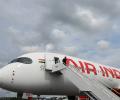
Loss-making Air India has introduced a new 'Basic Fare' category for select domestic flights, which does not include complimentary meals, as part of its efforts to trim expenses amid rising operational costs.
The government has suspended its directive requiring airlines to offer at least 60% of seats on flights without additional charges, following industry concerns about the impact on fares and pricing structures.

Air India is significantly embracing artificial intelligence to enhance operational efficiency, improve customer services, increase revenues, and reduce costs as part of its ambitious transformation plan under the Tata Group.

Air India and Air India Express are introducing a fuel surcharge on domestic and international flights due to rising jet fuel prices, impacting travel costs for passengers.

Civil Aviation Minister K Rammohan Naidu announced that public sector oil marketing companies will implement a partial and staggered increase in jet fuel prices for domestic airlines, aiming to protect passengers from steep fare hikes.
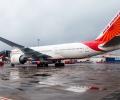
Indian carriers have cancelled over 10,000 flights since the onset of the West Asia conflict, as escalating tensions and airspace restrictions disrupted international operations, a senior government official said.

Akasa Air, despite facing headwinds from the West Asia conflict and rising aviation turbine fuel prices, expects to maintain a 30-40 per cent growth trajectory over the next five years and aims for an initial public offering (IPO) within two to four years, according to CFO Ankur Goel.
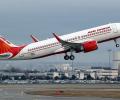
Air India has temporarily reduced its domestic flights by 22 per cent due to the impact of high fuel prices, following a previous reduction in international flights. The airline is offering re-accommodation, date changes, or refunds to affected passengers.

The broader conflict in West Asia, the largest international market for Indian carriers, has forced a sharp reduction in daily flights relative to the summer schedule.

'We may be able to wind back some of the schedule reductions we'd taken in recent months.'
IndiGo, Air India, and SpiceJet are opposing the government's directive to offer 60% of seats for free selection, arguing it will lead to increased airfares to compensate for lost revenue.
Air India group announces fuel surcharges on domestic and international flights due to rising Aviation Turbine Fuel (ATF) prices, following the government's decision to cap domestic ATF price hikes.

Outgoing Air India CEO Campbell Wilson stated that the airline's foundations have been rebuilt over the last four years, but non-delivery of aircraft on schedule has significantly impacted growth and fleet modernisation. He also revealed he has no plans to take up another full-time executive position after stepping down.

Aviation fuel prices for domestic airlines remain unchanged, providing stability for local carriers, while commercial LPG and 5-kg cylinders see a significant rate hike due to rising international energy costs.

Despite reporting a weaker-than-expected net loss of Rs 2,536 crore for Q4FY26, largely due to a significant non-cash forex loss, analysts remain optimistic about IndiGo's long-term prospects, citing strong demand trends, a favourable pricing outlook, and strategic cost-control measures.

Civil Aviation Minister Ram Mohan Naidu said the reduction in airport charges is aimed at containing airfare increases and supporting both airlines and passengers.

India's aviation sector is facing fresh turbulence, with rising fuel costs, the Ministry of Civil Aviation's free-seat directive, and geopolitical disruptions in West Asia clouding near-term earnings visibility.
Air India has announced a reduction in international flights and temporary suspension of services on six routes, including Delhi-Chicago, due to airspace restrictions and high jet fuel prices.

Aviation Turbine Fuel (ATF) prices have more than doubled to a record high, impacting airlines and consumers, while commercial LPG rates also see a significant increase.

Understand your travel insurance policy before travelling abroad this summer. This article outlines what travel insurance covers, including trip cancellations, missed connections, and medical emergencies, and what it excludes, such as war-related disruptions and pre-existing conditions.

IndiGo operator InterGlobe Aviation had a mildly encouraging third quarter in financial year 2026 (Q3FY26).
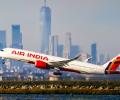
Tata Sons Chairman N Chandrasekaran addressed Air India employees, acknowledging the airline's challenging phase while reaffirming the Tata Group's commitment to its long-term transformation, focusing on service quality, safety, and operational improvements.

India is closely monitoring Sri Lanka's decision to offer foreign investors control of an airport near the China-controlled Hambantota port, as it could present a rare opening for Indian firms seeking strategic footholds in the Indian Ocean.
Air India CEO and MD Campbell Wilson has resigned after four years at the helm, prompting the airline to form a committee to find his replacement. Wilson's tenure saw significant changes, including the merger of airlines and fleet expansion, but also faced challenges such as the London-bound flight crash and safety concerns.
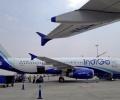
IndiGo airline will face near-term pressure on profitability from rising fuel prices following the escalation of conflict in West Asia, though it is likely to pass on higher costs to passengers over time because its ticket booking cycle is relatively short, according to a report by Moody's Ratings.
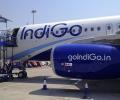
InterGlobe Aviation (IndiGo) is experiencing significant financial pressure, with its stock falling 18 per cent since the start of the Iran war, due to rising Brent crude prices, a weakening rupee, and disruptions to its West Asia and European flight networks caused by geopolitical tensions.

Passengers may think they are just booking a ticket, but airlines' clever design tricks are quietly picking their pockets.

India's duopoly in the domestic skies -- where IndiGo and Air India collectively control over 90 per cent of the market -- is highly skewed, leaving very little room for new players

'We have lost 70-80 per cent of our business from foreign guests.'

The Competition Commission of India, following its preliminary inquiry, said the airline appeared to have caused an appreciable adverse effect on competition by restricting its services.

Karex, the Malaysian company that makes roughly one in five of the world's condoms -- about five billion a year, supplying Durex and Trojan among others -- announced this week that it is raising prices by up to 30 percent. The reason is the Strait of Hormuz.

Besides, the carrier is having a technical stop in Kolkata for some of the North America flights from Delhi, they added.

Gandhi said it is ordinary Indians who pay the price in delays, cancellations and helplessness.

The primary drivers: Geopolitical disruptions inflating fuel and operational costs, and a surge in travel demand.
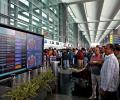
India's largest airline IndiGo on Thursday reported a 78 per cent decline in December quarter net profit at Rs 549.1 crore as flight disruptions and implementation of the new labour code took a toll on its earnings. The airline reported a net profit of Rs 549.1 crore in the October-December quarter, compared with Rs 2,448.8 crore earnings in the year-ago period, according to a company statement.
